

Restorative dentistry · Finchley
Dental crowns and bridges in Finchley
Lost or loose crown? Call 020 7998 7657 — or see our emergency dentist page.

Protecting and restoring a damaged tooth
A dental crown is a custom-made cap that fits over the prepared surface of a natural tooth, covering it completely down to the gumline. Once cemented in place it becomes a fixed, permanent restoration. Crowns restore the tooth’s shape, size, strength and appearance, and allow it to function normally again.
Crowns are most commonly recommended when a tooth can no longer be adequately restored with a filling — for example after significant decay, a crack or fracture, following root canal treatment, or where an existing large restoration has failed. They may also be used to improve the appearance of a severely discoloured or misshapen tooth where other options are unsuitable.
In practice, the boundary between cosmetic and restorative is often blurred. A porcelain crown placed on a broken tooth restores function and improves appearance simultaneously. Composite bonding can repair a chipped tooth and make it look better at the same time. At 110 Total Dentistry we do not treat cosmetic concerns as separate from overall dental health — we plan them together.
Cosmetic treatments available at our Finchley practice include teeth whitening, composite bonding, porcelain veneers, clear aligner orthodontics (Invisalign), dental implants for missing teeth, and ceramic crowns. Each is described in detail on its own dedicated page.

When a crown may be recommended
After root canal treatment to protect against fracture
Severely decayed or broken-down teeth
Cracked teeth at risk of further damage
Replacement of a large or failing restoration
Aesthetic improvement of a discoloured or misshapen tooth
Bridges may be suitable when
One or more adjacent teeth are missing
The abutment teeth on either side are sound and healthy
You prefer a fixed solution without implant surgery
Bone volume or medical history makes implants less suitable
Replacing one or more missing teeth
A dental bridge consists of one or more artificial teeth — called pontics — held firmly in position by crowns placed over the natural teeth on either side of the gap. The whole structure is cemented in place and is not removable by the patient, which many people find more convenient than a denture.
Bridges can restore chewing function, prevent remaining teeth from drifting towards the gap, and improve the appearance of your smile. However, the teeth on either side of the gap — the abutment teeth — must be prepared (shaped) to accept the crowns, which involves removing some healthy tooth structure. Bridges also do not stimulate the jawbone beneath the missing tooth in the way that a dental implant does, so some bone loss over time remains possible.
Making the right choice
Crown, bridge or implant?
Crown
- Restores a damaged existing tooth
- Fixed, strong and tooth-coloured
- Preserves the natural root
- Requires reshaping of the existing tooth
- Does not replace a missing tooth on its own
Bridge
- Replaces missing teeth without surgery
- Fixed, cemented in place
- Shorter treatment timeline than implants
- Adjacent teeth must be prepared
- Bone under the bridge may resorb over time
Implant
- Replaces the root as well as the visible tooth
- Adjacent teeth are not altered
- Helps preserve jawbone
- Requires a surgical procedure
- Longer overall treatment timeline
What to expect
Your crown treatment journey
Materials
Crown and bridge materials
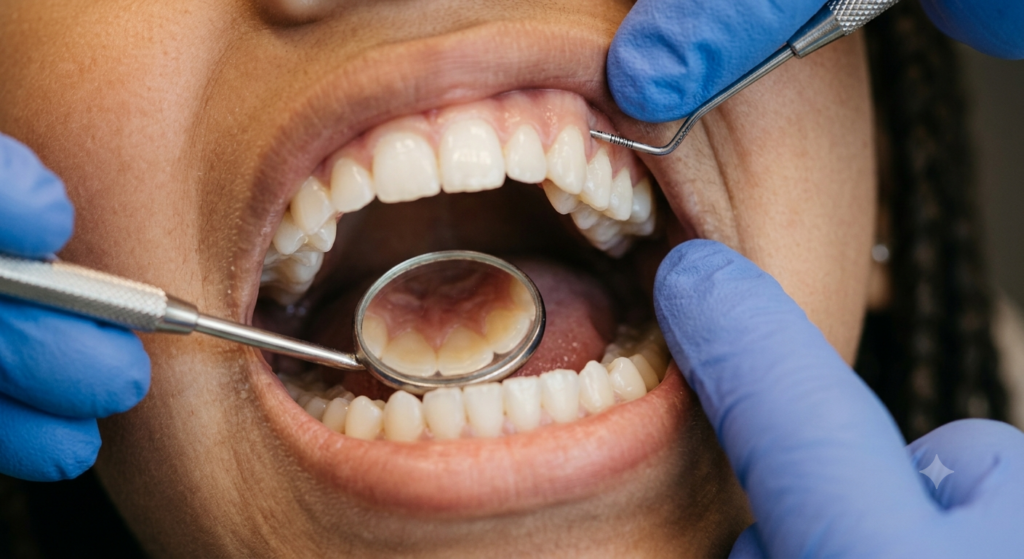
Closely matches the colour and translucency of natural teeth. Commonly recommended for front teeth and visible areas where aesthetics are a priority.
A metal substructure provides strength, with a porcelain outer layer for appearance. A practical choice for back teeth requiring a balance of aesthetics and durability.
Highly durable and suitable for back teeth where strength is the main consideration and the crown is not visible when smiling. Not tooth-coloured.
Aftercare
Longevity
Risks to consider
- Prepared teeth may be more sensitive initially
- Crowns can chip, fracture or come loose over time
- Decay can develop under a crown if oral hygiene is poor
- A bridge does not prevent bone resorption at the missing tooth site
- Local anaesthetic carries standard risks, discussed before treatment
Your dentist

Meet Dr Kozhaya Assaker
Dr Assaker holds a DDS (2002) and a postgraduate qualification in Oral Biology (2003), followed by a Diploma in Oral Surgery and Implantology (2007). He has completed further training in implantology and bone grafting in Switzerland, the USA and France.
He is a member of the British Dental Association (BDA) and holds active membership with the European Association for Osseointegration (EAO) and the International Team for Implantology (ITI). GDC registration number: 176427.
Dr Assaker consults in English, Arabic, French, Armenian and some Polish.
Common questions
Crown & bridge FAQs
Crown longevity varies depending on the material chosen, where the crown sits in the mouth, the forces placed on it during biting and chewing, and how carefully it is maintained. There is no guaranteed lifespan. Your dentist will discuss realistic expectations for your individual situation at the assessment appointment.
Root-treated teeth lose moisture over time and can become more brittle, making them prone to fracture — particularly back teeth that absorb higher biting forces. A crown is commonly recommended following root canal treatment to protect the remaining tooth structure. Whether a crown is needed depends on how much healthy tooth remains, and your dentist will advise accordingly.
A crown restores a single damaged tooth by capping it. A bridge replaces one or more missing teeth by suspending an artificial tooth (or teeth) between crowns fitted to the adjacent natural teeth on either side of the gap. Both are fixed restorations cemented permanently in place.
Both options have merits and limitations. A bridge can be completed without surgery and typically has a shorter treatment timeline. However, it requires preparation of the adjacent teeth, which are healthy tooth structure being altered. A dental implant preserves the adjacent teeth, supports jawbone health, and can last many years with proper care, but it involves a surgical procedure and a longer overall timeline. We will present all suitable options at your consultation so you can make an informed choice.
Call us as soon as possible on 020 7998 7657. If the restoration has come out intact, keep it safely — do not attempt to recement it yourself. Try to avoid leaving the prepared tooth exposed for any length of time. We will arrange an urgent appointment to assess and re-cement or replace the restoration. For out-of-hours guidance, please see our emergency dentist page.
Porcelain and porcelain-fused crowns are made to closely match the colour, shape and translucency of your surrounding teeth. The shade is selected carefully before the crown is sent to the dental laboratory. Full-metal crowns, which may be used in certain positions at the back of the mouth, are not tooth-coloured but are strong and durable. The most suitable material for you will be discussed at your assessment.
We are located at 110–112 Ballards Lane, Finchley, London N3 2DN — a short walk from Finchley Central station on the Northern line. To check current opening hours or arrange an appointment, please call 020 7998 7657 or email info@110totaldentistry.co.uk.
Book a crown or bridge assessment in Finchley
110 Total Dentistry is located at 110–112 Ballards Lane, Finchley, London N3 2DN — a short walk from Finchley Central station on the Northern line. Call us on 020 7998 7657 or email info@110totaldentistry.co.uk to arrange an assessment. A new patient examination is £75 and includes a full discussion of all treatment options.